

Why Salesforce Talent Is Changing Faster Than Salesforce Itself
The Salesforce ecosystem is evolving rapidly. But the skills businesses need are evolving even faster. For years, Salesforce hiring focused heavily on platform administration, configuration, and delivery support. Those capabilities still matter, but they are no longer enough on their own. The market is shifting toward something much broader:Strategic, commercially aware Salesforce talent that understands […]
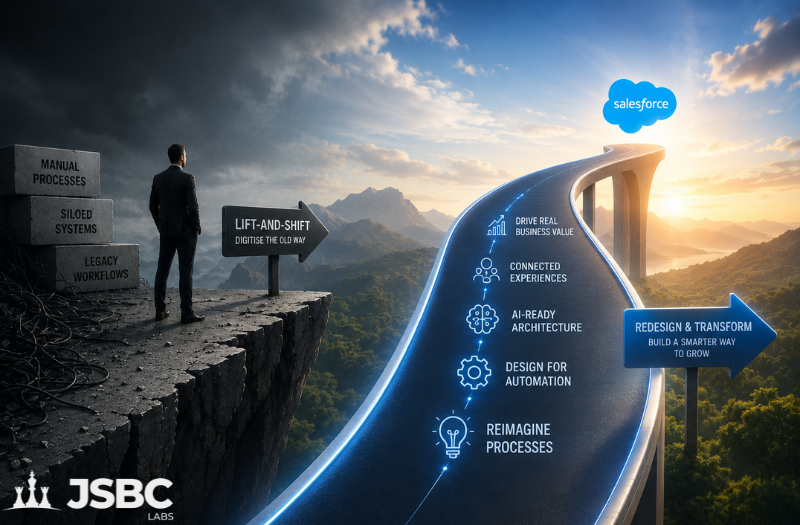
The End of “Lift-and-Shift” Salesforce Implementations
For years, many Salesforce implementations followed the same pattern: Take existing processes. Move them into Salesforce. Digitise the workflow. Go live. The problem is that digitising inefficiency does not create transformation. It simply makes broken processes move faster. As businesses face increasing pressure to improve operational efficiency, customer experience, and AI readiness, the traditional “lift-and-shift” […]
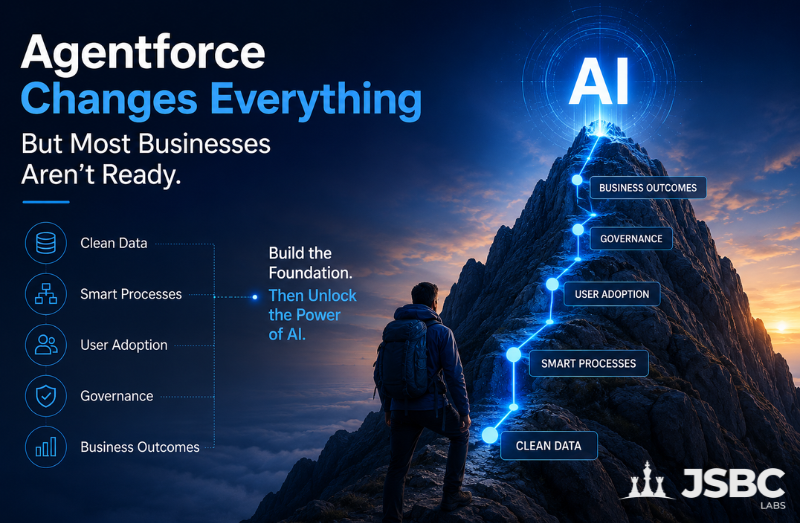
Agentforce Changes Everything — But Most Businesses Aren’t Ready
Salesforce has made its direction clear: the future of enterprise operations is AI-driven, autonomous, and deeply integrated into customer workflows. Agentforce is the clearest signal yet. But while businesses are racing to explore AI agents, copilots, and automation, most organisations still haven’t solved the fundamentals – fragmented data, inconsistent processes, low user adoption, and disconnected […]
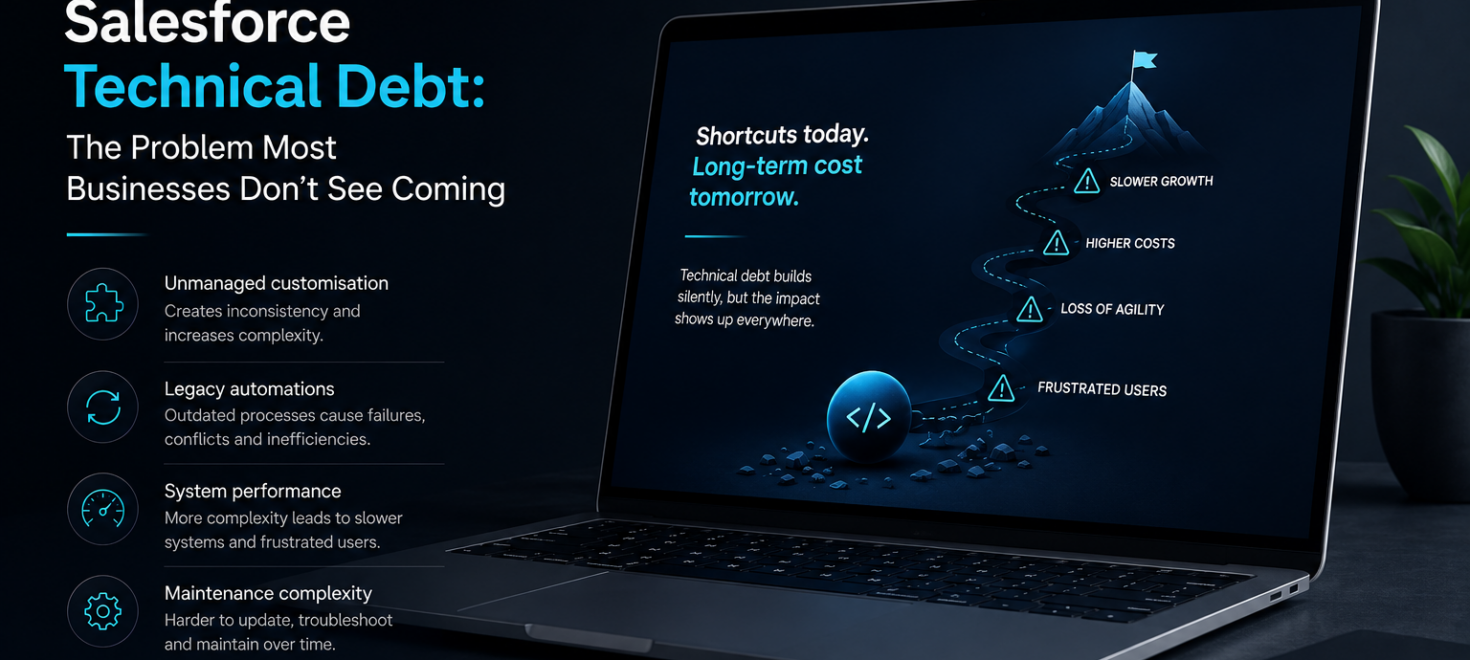
Salesforce Technical Debt: The Problem Most Businesses Don’t See Coming
When businesses invest in Salesforce, the expectation is usually simple: Better processes.Better visibility.Better scalability.Better operational efficiency. And in many cases, Salesforce absolutely delivers on those expectations. But there’s a hidden issue that often develops quietly over time inside growing Salesforce environments: Technical debt. Most businesses don’t notice it at first. The platform still works.Teams continue […]
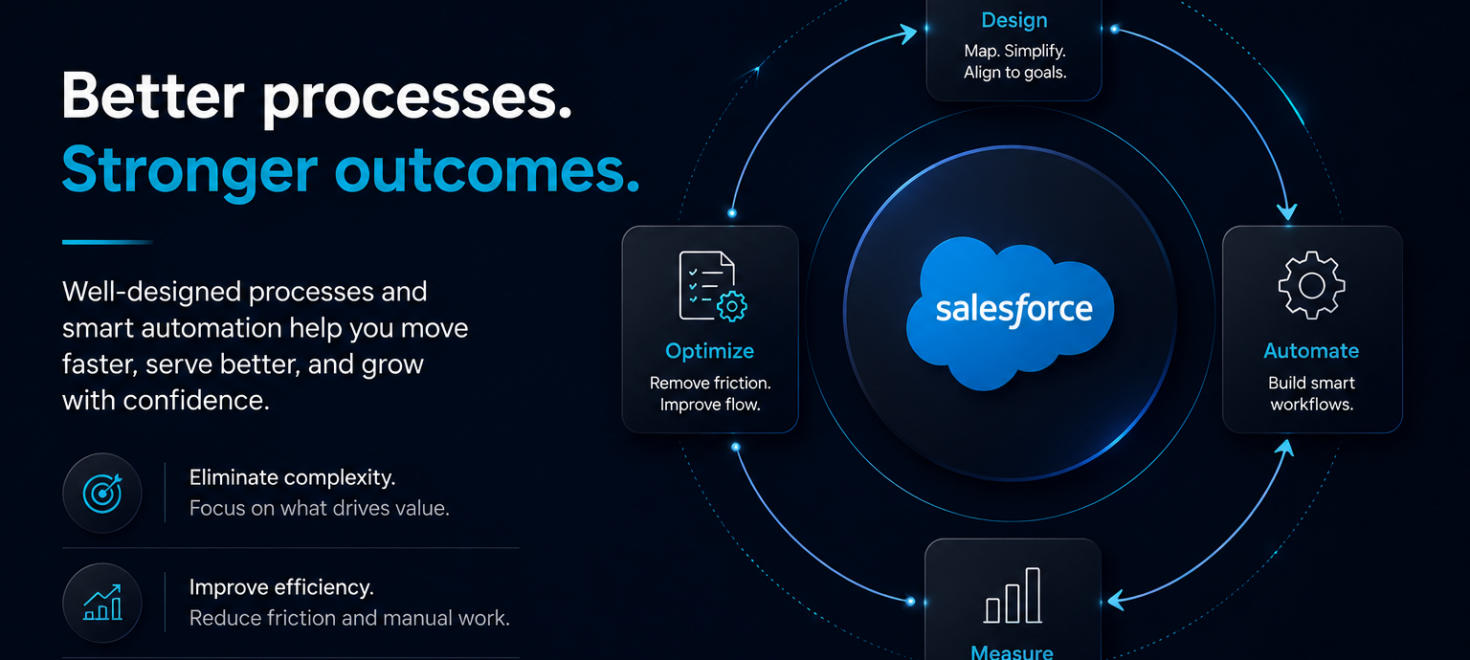
Automation Alone Doesn’t Fix Broken Processes
Automation has become one of the biggest priorities for modern businesses. Companies want faster workflows, fewer manual tasks, improved efficiency, and better operational visibility. Platforms like Salesforce make that possible through automation, integrations, and digital workflow management. But there’s a major issue many organisations overlook: Automating a broken process does not improve it. It simply […]
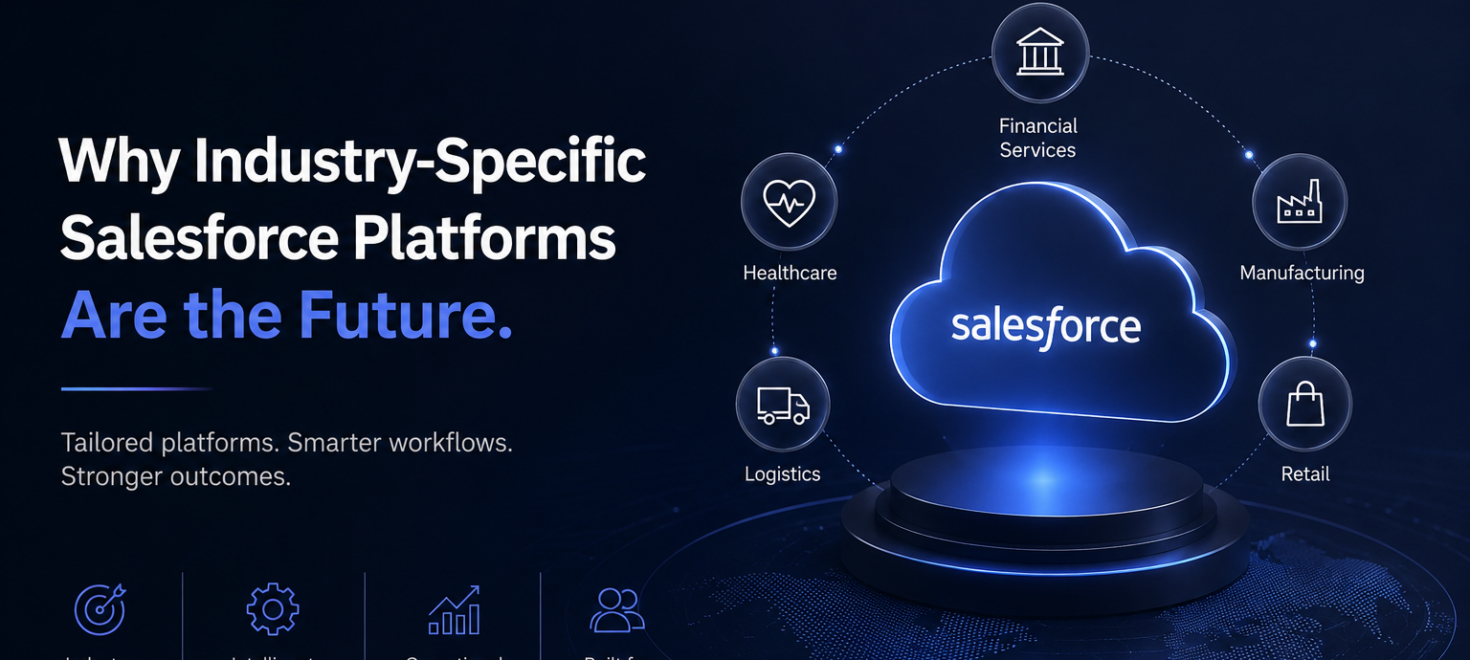
Why Industry-Specific Salesforce Platforms Are the Future
For years, businesses approached CRM systems with a fairly simple mindset:Implement one platform, standardise processes, and use the same structure across every department and workflow. But modern businesses are no longer operating in generic environments. Industries have become more specialised.Customer expectations have evolved.Operational complexity has increased.And businesses now require systems that support the way their […]

Why Most Salesforce Implementations Fail to Scale
Salesforce is one of the most powerful business platforms in the world.But despite its capabilities, many organisations still struggle with slow systems, fragile automations, frustrated users, and expensive rebuilds only a few years after implementation. The problem usually isn’t Salesforce itself. It’s how the platform was designed, implemented, and scaled. At JSBC Labs, we regularly […]
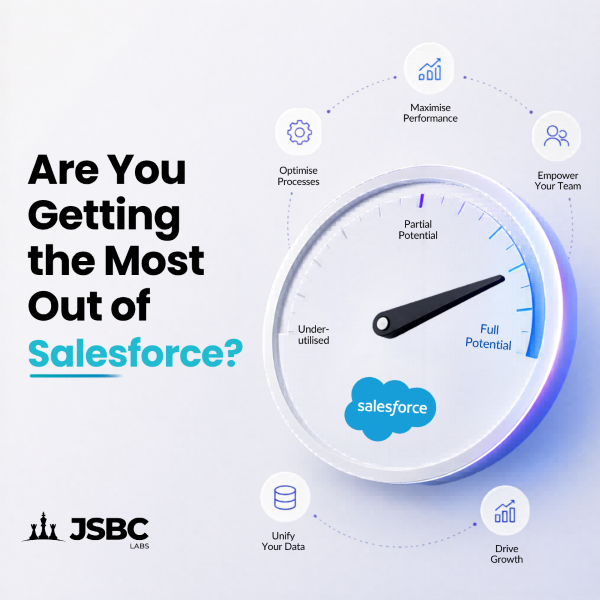
Are You Getting the Most Out of Salesforce?
Many businesses invest in Salesforce expecting transformation, but end up only scratching the surface of what’s possible.
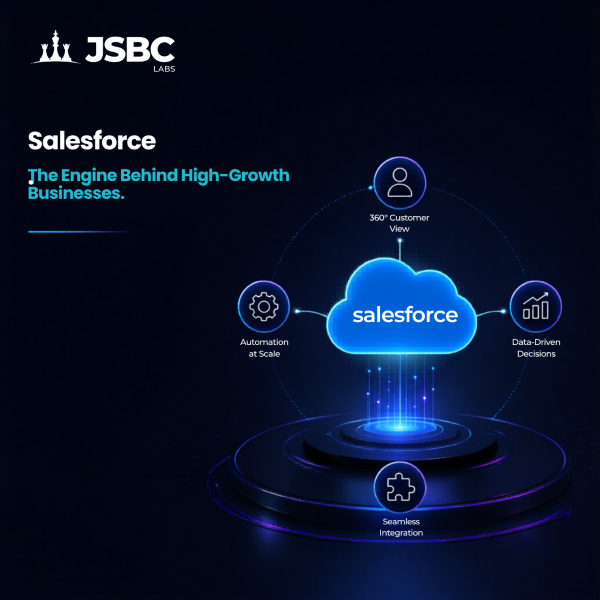
Unlocking Business Growth with Salesforce Solutions
In a world where customer experience defines success, businesses need more than just a CRM. They need a powerful, connected ecosystem, and that’s where Salesforce comes in.
The Future of Digital Innovation Starts with Smart Systems
In today’s fast-moving digital landscape, businesses are under constant pressure to adapt, scale, and innovate. The difference between companies that thrive and those that fall behind often comes down to one thing: how intelligently they use technology.


